
Protect Your Crypto: 5 Real Threats You Must Avoid
Billions stolen in crypto scams. Most via social engineering. Discover the 5 real threats and proven strategies to protect your Bitcoin and crypto
Introduction: The New Security Paradigm
This analysis distinguishes between verifiable data, observed trends, and potential scenarios, so you can form your own perspective with the greatest possible clarity.
The security architecture of the financial system has changed dramatically. Stablecoin issuers have become custodians of physical gold and government debt.
The paradox is clear:
- Institutional security: Stronger than ever
- Personal security: More vulnerable than ever
This article analyzes the 5 critical current threats and concrete strategies to protect your assets.
1. Tether and the Physical Centralization of Backing
The Verified Data
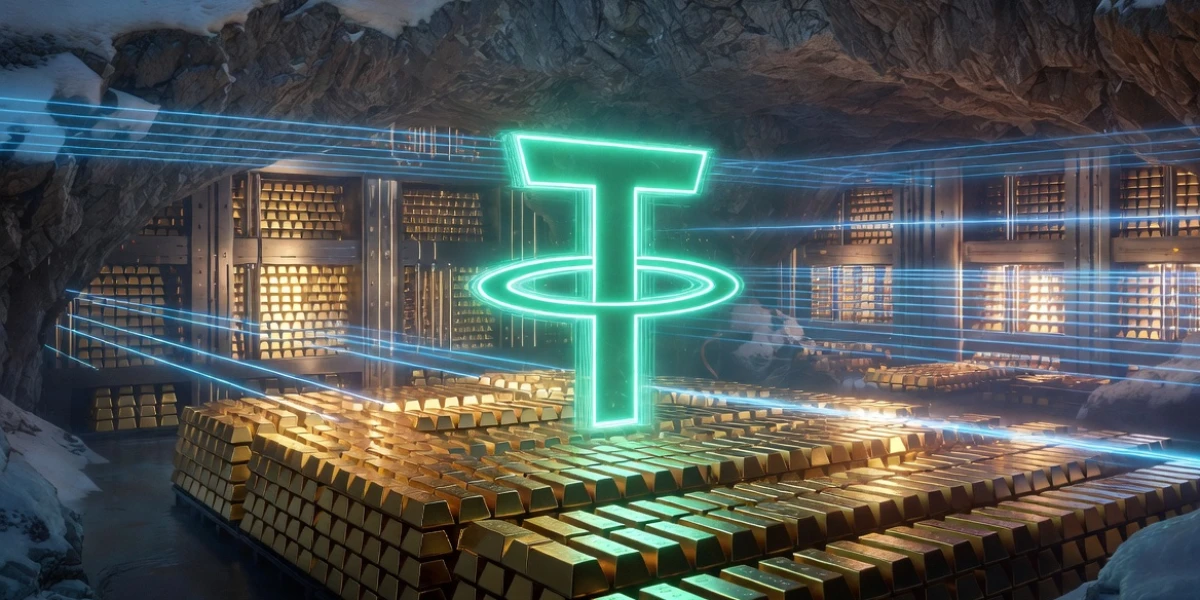
Tether has accumulated over $23 billion in physical gold (approximately 148 tonnes, according to Jefferies analyst estimates based on their purchasing rates), stored in Swiss bunkers. It also backs its XAUT token and maintains Bitcoin reserves.
These figures are based on analyst estimates and public statements, not on complete audits with full independent verification.
The Real Risk
If USDT's stability depends on physical assets held in Switzerland, these could potentially be seizable under a scenario of extreme international pressure.
Think of it this way: It's like keeping your money in a very solvent bank's vault in another country. The bank has plenty of money to pay you back, but if tomorrow that country's government decides to freeze foreign accounts, your money is still there... but you can't touch it.
What You Need to Understand
- USDT is a digitized dollar, not sovereign money
- Tether's solvency does not equal censorship resistance
- For long-term savings requiring censorship resistance, dependence on physical custodians remains a risk vector
2. State Capitalism: When the Government Directs Capital
The Current Context
Following the theses of analysts like Arthur Hayes, credit increasingly tends to flow less freely, and is being directed with increasingly political criteria.
In plain English: Previously, if you had a good business, you'd ask the bank for a loan and they'd give it to you if you were profitable. Now, the government decides which sectors get cheap financing and which don't. If your business isn't on the current political priority list, getting credit is much more expensive or outright impossible.
Government guarantee mechanisms (like those seen with MP Materials) demonstrate that capital is strategically allocated to secure finite resources.
The Impact on Your Portfolio
When the State guarantees prices and directs credit:
- Inflation tends to become a feature of the system, not a bug
- Fiat money and bonds progressively lose their function as a safe store of value
- Stablecoins tend to devalue along with the dollar
Bar talk: If the government prints money to subsidize strategic sectors, that extra money dilutes the value of the euros or dollars you already have. It's like a poker game where the casino starts giving chips away to some players: yours are still the same, but they're worth less now because there are more chips on the table.
The Protection Strategy
Maintain exposure to assets outside the planned devaluation circuit:
- Bitcoin in self-custody
- Physical gold under your direct control
3. Stablecoins and Sovereign Debt: The Inevitable Symbiosis
The Relationship You Need to Know
There's an increasingly evident symbiosis between stablecoin issuers and the US government. These issuers have become significant buyers of US Treasury debt.
The Implications
Why there won't be a total ban:
- Washington needs stablecoins to finance its deficit
- Regulated stablecoins will get the green light
The price to pay:
- Significantly higher levels of traceability and regulatory compliance across all transactions
- USDC and USDT are emerging as the most monitored assets in the financial ecosystem
Bottom line: The government won't ban stablecoins because it benefits from their existence—they buy its debt. In exchange for letting them operate, it demands to see everything. Think of a shop that agrees to pay protection money so it doesn't get shut down: the business stays open, but the collector knows exactly how much you sell every day.
Your OpSec Strategy
If you value privacy, assume that any movement in regulated stablecoins is potentially visible to regulators. The gray zone has shrunk dramatically.
4. Institutionalization: BlackRock and Ethereum's Bifurcation
The Current Phenomenon
Larry Fink's (BlackRock) vision of tokenization is materializing at an accelerated pace.
The BUIDL fund now has:
- Over $1.8 billion in market cap
- $2.1 billion in TVL (Total Value Locked)
- Deployment on public networks like Ethereum
The Censorship Risk
Important: Just because BlackRock uses Ethereum doesn't mean BlackRock is decentralized.
Institutional migration introduces potential risks, as some tokenized assets include administrative control mechanisms that could allow:
- Freezing assets at the smart contract level
- Requiring KYC for verified addresses
- Selectively censoring transactions in certain regulatory scenarios
Here's how to think about it: Imagine a shopping mall that's open to anyone. One day, a big chain store (BlackRock) comes in and rents half the space. That chain demands the mall management install security turnstiles and check ID for everyone entering their zone. The rest of the mall remains free, but if you want to shop at the big stores, you'll need to identify yourself.
Possible Future Scenario
Some analysts envision a scenario where Ethereum could differentiate between institutional and open layers:
| Institutional Ethereum | Free Ethereum |
|---|---|
| Verified addresses | P2P transactions |
| KYC compliance | No restrictions |
| Tokenized RWA assets | Pure DeFi |
Warning
Avoid interacting with DeFi protocols that deeply integrate tokenized RWA (Real World Assets). They could inherit censorship restrictions that affect your wallet.
Translation: RWAs are real-world assets (stocks, bonds, real estate) converted into tokens. If a DeFi protocol mixes these tokens with your money, the entire protocol must comply with traditional asset rules. It's like bringing a bottle of alcohol to an underage party: suddenly the whole party has problems, even if you were just drinking water.
Conclusion: Your Crypto Survival Plan
Crypto security divides into two fronts:
Macro-Security
The fiat system shows a clear tendency to armor and digitize itself to survive.
Your protection: Asset sovereignty. Keep Bitcoin or gold under your direct control, not derivatives or tokens.
Micro-Security (OpSec)
No amount of gold in a Swiss bunker will save you if you hand over your seed phrase.
The 3 unbreakable rules:
- Never digitize your seed phrase. Never in photos, emails, clouds, or documents.
- Tech support never asks for keys. No Ledger, Trezor, or exchange employee will ever ask for your seed phrase.
- You are your own bank. As such, you're target number one for the world's most sophisticated criminals.
Crypto security doesn't depend solely on technology, but on understanding the economic and social environment in which it operates.
The final question: It's not whether the system will collapse, but whether your personal security will withstand someone's attempt to take everything from you.
Frequently Asked Questions: Crypto Security
Direct answers to harden your security posture.
Q1: If Tether has $23 billion in gold, why isn't it safe for savings?
The key difference: Solvency does not equal censorship resistance.
Tether has over $23 billion in gold, but the USDT smart contract on Ethereum or Tron includes a blacklist function.
The concrete risk:
If your address ends up on a sanctions list by mistake or association, those funds freeze instantly, regardless of how much gold the parent company has.
Recommended action:
For savings longer than 6 months:
- Rotate toward Bitcoin in self-custody
- Diversify into decentralized stablecoins like DAI or LUSD that don't have centralized admin functions
Q2: How does a hardware wallet protect me from social engineering attacks?
Direct answer: It doesn't protect you completely.
A hardware wallet like Trezor or Ledger signs transactions, but it doesn't validate what your eyes see or what your brain decides.
Impersonation attacks grew 1400% in 2025 because users, in a panic, typed their seed phrase into fake interfaces. At that moment, the physical device's security became irrelevant.
Fundamental rule:
No legitimate tech support will ever ask you to interact with your seed phrase.
Recommended action:
Implement a Passphrase (25th word). It's like having a safe with two combinations: one opens a compartment with pocket change, and the other opens where the real money is. If you're forced to reveal your 24-word seed:
- Attackers will see an empty wallet or one with minimal balance (decoy)
- Your real funds remain hidden behind the additional password that's never written digitally
Q3: Should I worry about my DeFi assets with BlackRock on Ethereum?
Direct answer: Yes.
The entry of Real World Assets (RWA) brings regulatory contagion risk.
The problem:
If a DeFi protocol mixes liquidity from permissioned tokens (requiring KYC) with free liquidity, the entire protocol could be forced to censor transactions to comply with regulations.
Segregation strategy:
| Public Wallet | Cold Storage |
|---|---|
| Interaction with institutional platforms | Completely isolated |
| KYC verified if necessary | No complex smart contracts |
| For trading and liquidity | Storage only |
Recommended action:
Review your smart contract permissions (Token Approvals) monthly:
Think of it this way: Every time you use a DeFi app, you give it permission to move your tokens—like giving your car keys to a valet. If you don't revoke that permission, the valet still has your keys even though you don't use that parking lot anymore. Revoke them.
Revoke access to any old protocol you no longer use. Inactivity doesn't protect you; revocation does.
Q4: Should I buy tokenized gold like XAUT or PAXG?
The technical reality:
Tokenized gold is efficient but introduces counterparty risk. You have a digital IOU for a gold bar that someone else holds.
According to CoinDesk reports, Tether stores its gold in a high-security bunker in Switzerland, with purchase rates of up to $1 billion monthly.
The risk:
If the custodian is seized or the bunker becomes inaccessible, your token loses its parity with physical reality.
When to use tokenized gold:
| Appropriate use | Inappropriate use |
|---|---|
| Short-term trading | Catastrophic insurance |
| Medium-term hedging | Protection against systemic collapse |
| Portfolio diversification | Last-resort reserve |
For total protection:
The only real hedge is the physical asset in your direct possession or in a legally dispersed jurisdiction under your name.
Verified tokens:
Additional Resources
Security Tools
- Revoke.cash - Contract permission revocation
- Etherscan Token Approvals - Approval verification
Hardware Wallets
Reference Reports
Decentralized Stablecoins
Related articles

Web3 without seed phrase: smart wallets and traceable money
How Web3 leaves the seed phrase behind and enters the era of smart wallets, passkeys and verified identity on the way back to the bank.

Silicon Deception: The New Era of AI-Powered Crypto Scams and How to Protect Your Wallet in 2025
Crypto scams have evolved. Generative AI, voice cloning and Wallet Drainers are emptying wallets. Learn to spot the threat and defend yourself with simulation tools and the Zero Trust mindset.

Ultimate DeFi Security Guide (2025): Protect Your Crypto Assets
Learn about DeFi security. This guide teaches you how to avoid rug pulls, understand impermanent loss and protect your crypto with advanced OpSec.
Tags
Comments
What did you think about this article?
Share your experience and help fellow crypto navigators.
Information That Protects Your Capital.
Stay protected: receive free monthly alerts about new crypto threats, exclusive security guides, and practical resources to safeguard your funds. Your shield against fraud.
5. Social Engineering: The Biggest Threat to Your Cryptocurrency
This is the most important section of the article.
The Numbers You Need to Know
According to the Chainalysis 2026 Crypto Crime Report:
Anatomy of a Typical Attack
Step 1 - The Vector:
They don't break blockchain encryption. They don't brute-force guess keys. They use Social Engineering.
The classic playbook: The Ronald Spektor case in 2024 set the precedent. He was charged with stealing nearly $16 million by posing as a Coinbase representative, convincing victims their accounts were compromised. Two years later, the same scheme still works with AI-enhanced variants.
Step 2 - The Victim's Mistake:
Under induced panic, users hand over their seed phrase or transfer funds to supposedly secure wallets controlled by attackers.
The oldest trick in the book: It's the digital version of the classic con. They call saying there's an urgent problem with your account. They scare you, and when you're nervous, they ask for the keys to your house to protect it. Once they have them, they clean out the place.
Step 3 - The Laundering:
Attackers convert traceable assets (BTC/LTC) to Monero (XMR) through chain-hopping before authorities can freeze the funds.