Crypto Inheritance: How Not to Lose Your Family's Bitcoin When You Die
Families who inherit crypto hit a wall: lost keys, exchanges that take months, and a tax authority that charges for a value that no longer exists.
The technology of decentralized networks and human biological fragility have collided to create one of the most silent wealth transfer crises in our recent history. In this year 2026, digital assets are fully integrated into the global economy and are a core part of the wealth of millions of people. The central problem arises because the immutability of the blockchain does not forgive the mortality of its investors. The sophisticated tools designed to shield savings against spy agencies or cyber-attacks are the very same barriers that are leaving the families of deceased users in ruin. This article details the mathematical situation of lost assets, dissects the current international tax framework, and establishes an action plan to configure a technical inheritance system that does not depend on the slowness or goodwill of courts and banks.
Phase 1. The X-Ray of the Global Supply in 2026
The actual circulating supply of Bitcoin has nothing to do with the nearly twenty million coins theoretically mined to date by miners (in the year 2026, there are approximately 19.9 million Bitcoin mined). Current forensic analyses clearly differentiate between long-term investors and those who have irreversibly lost access to their funds. According to data published by the analytics firm Glassnode in 2026, the volume of zombie coins inactive since July 2010 would be close to a value of $92.9 billion.1 In parallel, the circulating supply valued at a loss is estimated to be around $629.6 billion globally.2 It is advisable to take these figures as estimates, not as exact counts, because the methodology itself is based on probabilities regarding coins that have not moved for years. This immense accumulation of latent capital destroys the wealth of thousands of households due to the chronic absence of contingency plans.
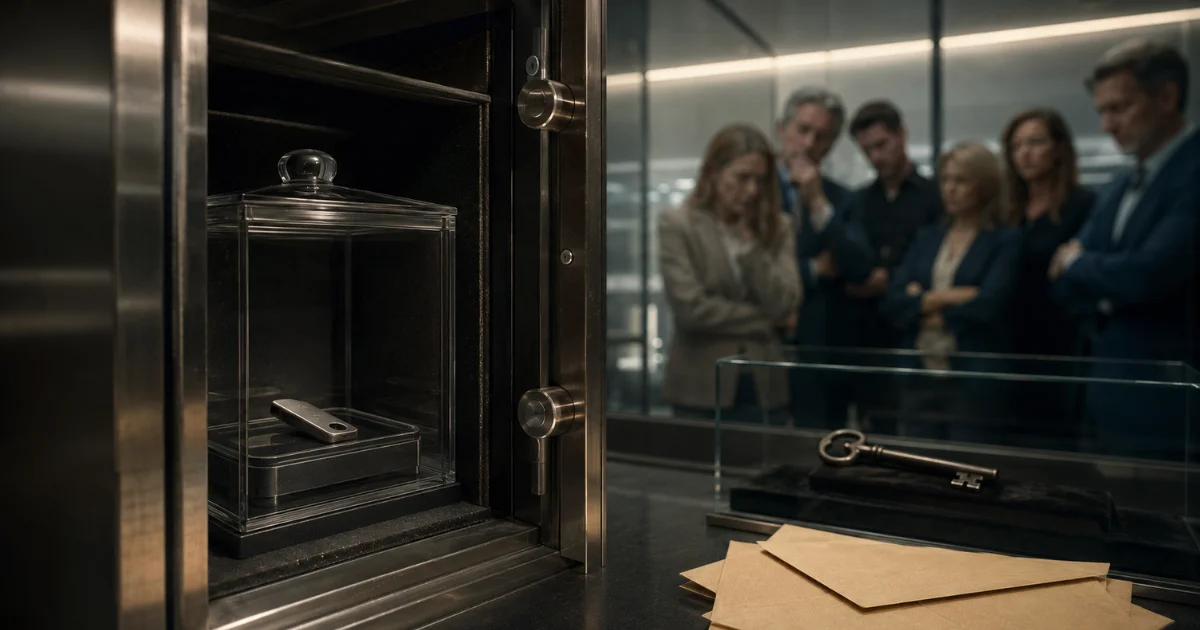
To understand this volume of loss, we must imagine buying an indestructible titanium safe. The owner puts their family’s life savings inside the box, swallows the only key, and dies the next day in a traffic accident. The physical money still exists inside the metal cube, but it has disappeared from the world economy forever because no one can open the door. Fifty-seven percent of cryptocurrency owners are from the Millennial generation.3 And of that group, 62 percent report that digital assets constitute at least one-third of their total net worth; this generation trusts digital platforms much more than traditional banks but lacks succession backup infrastructures. These individuals distrust the traditional financial system and operate with extreme security protocols that require memorizing dozens of random words or using computer devices isolated from the internet. When the owner has an accident, all that technical knowledge dies with them, condemning their heirs to an inevitable mathematical disinheritance.
Phase 2. The Current International Tax and Legal Framework
Europe: MiCA and the Travel Rule
In 2026, the margin for informality has been drastically reduced for digital inheritances. In the European Union, the MiCA regulation imposes tight control over service providers and ends its grace periods, requiring full authorization to operate in European territory after its transition period ends on July 1, 2026.4 The travel rule of the European Regulation on Transfers of Funds requires that crypto-asset transfers involving a provider subject to the rule be accompanied by information on the originator and the beneficiary, regardless of the amount.4 It does not turn pure self-custody between individuals into the same operational flow as a regulated exchange, but as soon as the funds touch a platform subject to the rule, traceability is activated. Inheriting a hard drive with cryptocurrencies and taking it to a European exchange today is identical to showing up at a bank branch with a briefcase full of unmarked bills. The compliance department can block, hold, or subject the operation to enhanced review until the heir proves their identity, succession rights, and the lawful origin of the funds. Heirs find themselves trapped for months in a bureaucratic labyrinth to prove that their deceased family member’s capital is completely legitimate.
United States: Form 1099-DA and the 706 Trap
The United States applies equally suffocating tax pressure with the Internal Revenue Service’s Form 1099-DA.5 The law in effect in 2026 requires brokers to report gross proceeds and the cost basis of digital assets acquired since January of this year.5 The critical danger lies in the estate tax on Form 706, which values inherited assets at their market price on the date of the original owner’s death, although the executor can opt for an alternative valuation six months later under certain conditions. The underlying problem is not a single, unavoidable rule, but the combination of extreme volatility, slow procedures, lack of liquidity, and poor tax planning. If an asset is worth one million dollars on the day of the owner’s death and is valued on that date, the US tax authority will calculate the tax on that million. Think of inheriting a million-dollar house on the day of death, but while you are going through the six-month process, a hurricane destroys it, leaving its value at zero, yet you still owe taxes on the original million. It is also worth knowing that the wash sale rule, the one with the thirty-day period that disallows the loss, is linked to stocks and securities, and as of today, the IRS treats cryptocurrencies as property, so it does not automatically apply to them. Several proposals have emerged to extend it to crypto since 2021, but none have passed both chambers. What really weighs on the heir is the time trap. If the courts take ten months to validate the will and the market collapses by eighty percent, the heir will receive the crumbs but will have to pay taxes on the value locked in at the date of death if they did not opt for the alternative valuation in time. This lack of coordination leads entire families to bankruptcy.
Spain, Latin America, and Exchanges
In Spain and Latin America, it is advisable to separate three distinct planes that grief often mixes up. First, the reporting obligations: the Tax Agency requires certain providers and intermediaries to submit Forms 172 and 173 to report balances as of December 31 and transactions for the year.6 Second, the Inheritance Tax: inherited crypto-assets are integrated into the hereditary mass like any other asset. Third, the exchange: when it comes to liquidation, the platform demands documentary proof and the lawful origin of the funds. All this control coincides with the 2026 FATF report on self-custody wallets and peer-to-peer transactions.7 Despite handling billions, centralized platforms still do not offer a real equivalent to the direct beneficiary designation of traditional banking. Coinbase does not allow naming a beneficiary within the account and leaves the transfer in the hands of succession documents or intestacy law.8 Kraken also does not offer this feature and maintains a documentary claim process for deceased accounts, with its dedicated team and required paperwork.910 Binance has incorporated an inheritance plan with a nominee figure for certain cases, but it does not replace local succession law, requires documentary verification, can take between one and two months, and also requires biometric validation from the claimant.11 Delegating the custody of assets to a centralized third party does not solve the succession problem; it just adds the heirs to a waiting list.
Phase 3. Technical Architecture and Programmable Succession in 2026
Blind Inventory and Fragmented Cryptography
The paralysis of courts and exchanges has forced advanced users to program inheritance directly into the code of decentralized networks. The foundational physical solution in 2026 is the notarized blind inventory combined with the fragmented cryptography algorithm. The owner drafts a legal will stating that they own digital assets and indicates who should inherit them but omits the passwords in the public document. The actual cryptographic key is mathematically divided into five pieces (using the Shamir’s mathematical scheme), and it is necessary to join three to reconstruct the original secret. It is the equivalent of dividing a treasure map into fragments and giving them to different family members and executors so that they can only open the safe if they collaborate before the notary after the death, ensuring that no single person has unilateral access, as in bank vaults.
Smart Wallets and Social Recovery (ERC-4337)
One of the most relevant technological advances for crypto succession is the real adoption of the ERC-4337 standard and account abstraction in smart wallets.12 It’s not new this year; the standard was deployed on the mainnet in March 2023, but its use has grown to millions of active smart wallets. The idea is simple, although it sounds like engineering: a normal wallet is like a box with a single lock; whoever has the key takes everything, and if you lose the key, you lose everything. These smart wallets are a box with programmed rules inside; they decide who can open it, when, and under what conditions. Advanced wallets allow for the configuration of a native social recovery system using predefined guardians. The owner chooses accounts of family members or trusted lawyers who can vote to transfer control of the money in an emergency. To prevent betrayals, this system includes immutable time locks recorded at the code level, like the Candide module that establishes a fourteen-day waiting period.13 It works exactly like a company’s joint account but adds an automatic emergency brake. If the guardians maliciously try to steal the funds, the legitimate owner receives an alert and has two full weeks to cancel the operation by pressing a button.
The Dead Man’s Switch (Sarcophagus)
Users with extreme profiles or highly sensitive corporate assets now resort to the Sarcophagus protocol on immutable storage networks.14 This system operates as a completely decentralized dead man’s switch. The creator encrypts the master passwords and hires external validators called archaeologists, paying them with cryptocurrencies.15 The asset owner must send a periodic proof of life to the network to keep the secret hidden and protected. It is identical to the safety pedal that train drivers must press every few minutes during their shift. If the user dies or falls into a coma, they stop sending the life signal, the protocol activates the planned mechanism, and the archaeologists are financially incentivized to release the keys to the designated heirs according to the contract’s rules. Whoever fails to comply loses the bond they had deposited, so the money itself pushes them to do things right.
Real-World Asset Tokenization (ERC-7878)
The ecosystem has also proposed the ERC-7878 standard, an interface for inheritable contracts that would allow the transfer of tokens to heirs after the owner’s death.16 It is not a real-world asset tokenization standard in itself. In tokenization scenarios, it could be applied to tokens representing bonds, shares, or real estate, provided there is a compatible legal and registration framework.16 The most ambitious part is its ability to rely on external notary oracles. It would be the equivalent of connecting a country’s civil registry directly to Ethereum’s code: when the doctor signs the death certificate, the notary would send a signal to the blockchain, and the ownership of the tokenized house would pass to the children without intermediaries. It’s best to take it for what it is: a proposal with potential, not something already operational on a large scale. Its real application will depend on technical adoption, jurisdiction, legal oracles, and the regulatory recognition of each country.
Phase 4. Zero-Trust Action Guide
Leaving digital inheritance to improvisation today is equivalent to burning a lifetime’s worth of assets. Every responsible investor must implement a strict protocol, always assuming that hard drives will fail and institutions will create administrative hurdles during the worst moments of family grief. The master plan requires implementing the following structured measures:
Money for daily operations must be stored in ERC-4337 smart wallets with social guardians and a fourteen-day security time lock.1317
The family’s main capital must be isolated on offline devices and fragmented using split cryptography to disperse the physical risk across multiple secret locations.
The owner must synchronize all this technical infrastructure with civil law by signing a blind inventory will with a lawyer specializing in digital assets. This gives full legal validity to the asset transfers without exposing the wallets’ recovery words to public record scrutiny.18
To safeguard extremely confidential international information, it is vital to activate a Sarcophagus contract programmed to require life confirmations every exact six months.19
The user must prepare a complete documentary package during their lifetime that proves the lawful origin of the money from their first investment years ago. Submitting original bank receipts from centralized platforms directly to the exchange’s compliance officer helps to deactivate the money laundering alarms required by MiCA.4 Preparing this forensic file in life can transform a process of blocked accounts that drags on for months into a procedure resolved in a few weeks.
One last thing, and this is not a trivial matter. None of this replaces an estate lawyer or a tax advisor in your jurisdiction. The rules change from one country to another and from one year to the next, and a planning mistake is paid for dearly and late. Use this article as a map to ask the right questions, not as a legal opinion.
Sources and Documentary References
Related articles

What Every Crypto User Must Know About the New Global Regulation
The rules of digital money have changed. SEC, CFTC, FATF and MiCA are redrawing the global crypto map. Here is what you need to know to protect your assets.
%2FPORTADA%20brujulacrypto.png?alt=media&token=8f4ce7fc-a784-4913-9007-0aa92f78aa62)
Goodbye to the Crypto "Wild West": The Ultimate MiCA Survival Guide (2025)
MiCA is the European crypto regulation in force since December 2024. It mandates reinforced KYC on exchanges, private wallet verification (over €1,000), Travel Rule with zero threshold and White Paper approval for stablecoins. Affects Kraken, Coinbase, Binance and Bitpanda users with new proof-of-funds requirements.

Beyond Price: ETH's Unseen Economic Gravity
Amid market chaos, ETH's resilience isn't luck. Discover the 'Economic Gravity'—a powerful new force born from staking, MEV Burn, and L2s—that now anchors its value in 2025.
Tags
Comments
What did you think about this article?
Share your experience and help fellow crypto navigators.
Information That Protects Your Capital.
Stay protected: receive free monthly alerts about new crypto threats, exclusive security guides, and practical resources to safeguard your funds. Your shield against fraud.